The Business Tools Worth Paying For (And the Ones You Don't Need)
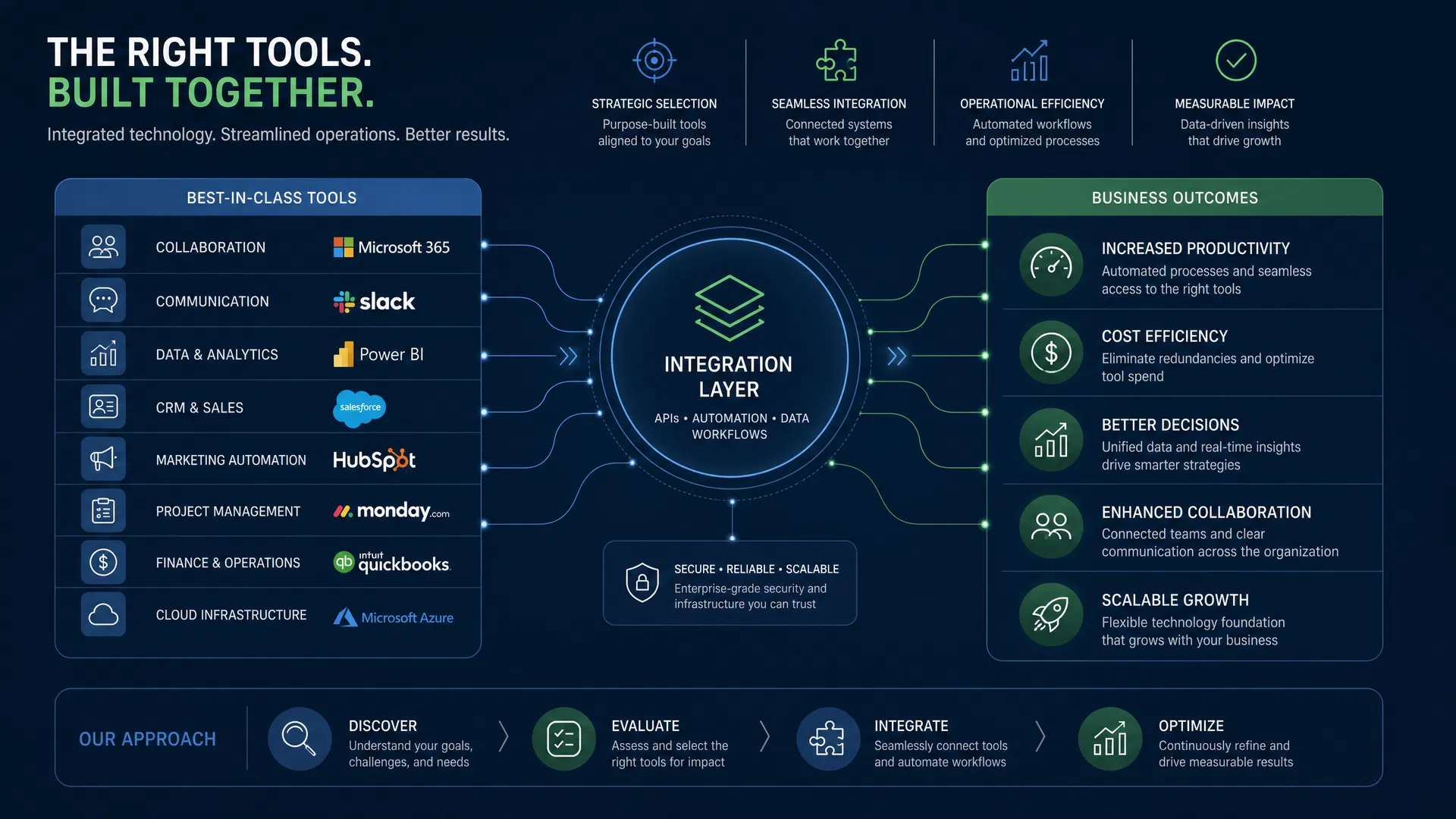
The Tool Trap
There's a tool for everything. Project management, invoicing, scheduling, accounting, customer management, email marketing, social media, analytics...
And they all promise to fix your business.
So you buy them. You set them up. You use them for a month. Then they sit unused while you pay monthly.
Here's the truth: **tools don't fix business problems. Systems do.**
But some tools do make systems easier to implement and maintain.
The Tools That Actually Matter
1. Accounting Software (Non-Negotiable)
QuickBooks, FreshBooks, Wave, or similar
Why: You need to know your numbers. This is not optional. This is foundational.
Cost: $15-100/month depending on complexity
2. Project Management (If You Have a Team)
Asana, Monday, Notion, or similar
Why: If you have people, you need a way to assign work, track progress, and hold people accountable.
Cost: $0-30/month per person
3. Customer Management (If You Have Customers)
HubSpot, Pipedrive, or similar
Why: You need to know who your customers are, what they've bought, and what they need next.
Cost: $0-100/month depending on features
4. Email Marketing (If You Have a List)
Mailchimp, ConvertKit, ActiveCampaign, or similar
Why: Email is one of the highest ROI marketing channels. You need a way to send professional emails at scale.
Cost: $0-50/month depending on list size
The Tools You Probably Don't Need (Yet)
The Real Principle
Before you buy a tool, ask:
1. **What problem does this solve?** Be specific. "I need better organization" is not specific. "I need a way to track which customers have paid their invoices" is specific.
2. **Can I solve this without a tool?** Seriously. Can you use a spreadsheet? Can you use email? Can you use a notebook?
3. **If I do buy it, will I actually use it?** Most tools fail because they're too complex or too different from how you actually work.
4. **What's the cost of not having this tool?** Is it costing you more than the tool costs?
The Startup Tool Stack
If you're just starting:
Total: $20-40/month
That's enough. Everything else is optional until you have a real problem that needs solving.
The Real Truth
The best tool is the one you'll actually use. A $5/month tool you use every day is better than a $100/month tool you never open.
Start simple. Add complexity only when you have a real problem that requires it.
And remember: **tools support systems. They don't replace them.**
Get your systems right first. Then find tools that make those systems easier to execute.
Ready to Apply These Ideas to Your Business?
Book a 15-minute strategy call to discuss how these concepts apply to your specific situation.
Book Your Free Business Systems Snapshot