The Difference Between Running a Business and Owning a Job
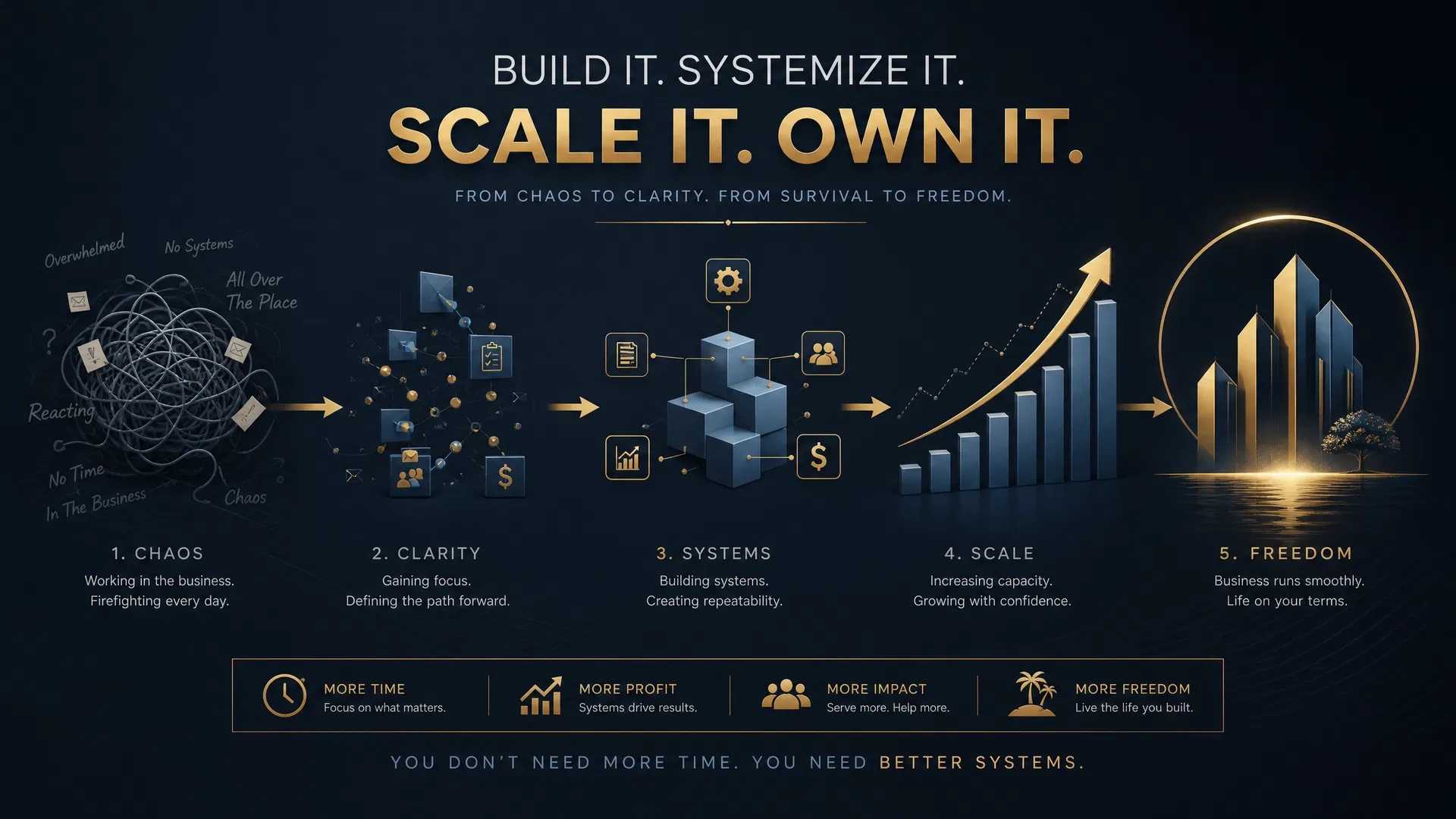
The Uncomfortable Truth
You own a business. But do you own a business, or do you own a job?
Here's the test: **If you took a month off, would your business keep running?**
If the answer is no, you don't own a business. You own a job that you happen to own.
The Difference
A Job:
A Business:
Most entrepreneurs start with a job and never transition to a business.
Why This Matters
If you own a job:
If you own a business:
How to Transition from Job to Business
Step 1: Document Your Processes
Write down how you do your most important work. This is the first step to making it repeatable without you.
Step 2: Hire Someone to Do Part of It
Pick one task that takes significant time. Hire someone to do it. Train them. Let them do it.
Step 3: Build Systems
Create workflows, checklists, and processes that don't require your direct involvement.
Step 4: Delegate Decision-Making
Stop making every decision. Give your team clear guidelines and let them decide within those boundaries.
Step 5: Measure Results, Not Activity
Stop tracking how busy people are. Start tracking if they're hitting the right results.
The Scary Part
Most entrepreneurs don't make this transition because it's scary.
If you delegate, what if they mess up? If you document processes, what if someone does it differently? If you step back, what if the business falls apart?
Here's the truth: **if your business falls apart when you step back, it's not a business — it's a job**. And you need to fix that anyway.
The Real Freedom
The goal isn't to work less (though that's a nice side effect). The goal is to build something that doesn't require you to be everywhere at once.
A business that:
That's a real business.
And it starts with one decision: to stop being the bottleneck.
Start this week. Pick one task. Document it. Delegate it. See what happens.
Then do it again.
Ready to Apply These Ideas to Your Business?
Book a 15-minute strategy call to discuss how these concepts apply to your specific situation.
Book Your Free Business Systems Snapshot