How to Write Your First SOP (Without Overcomplicating It)
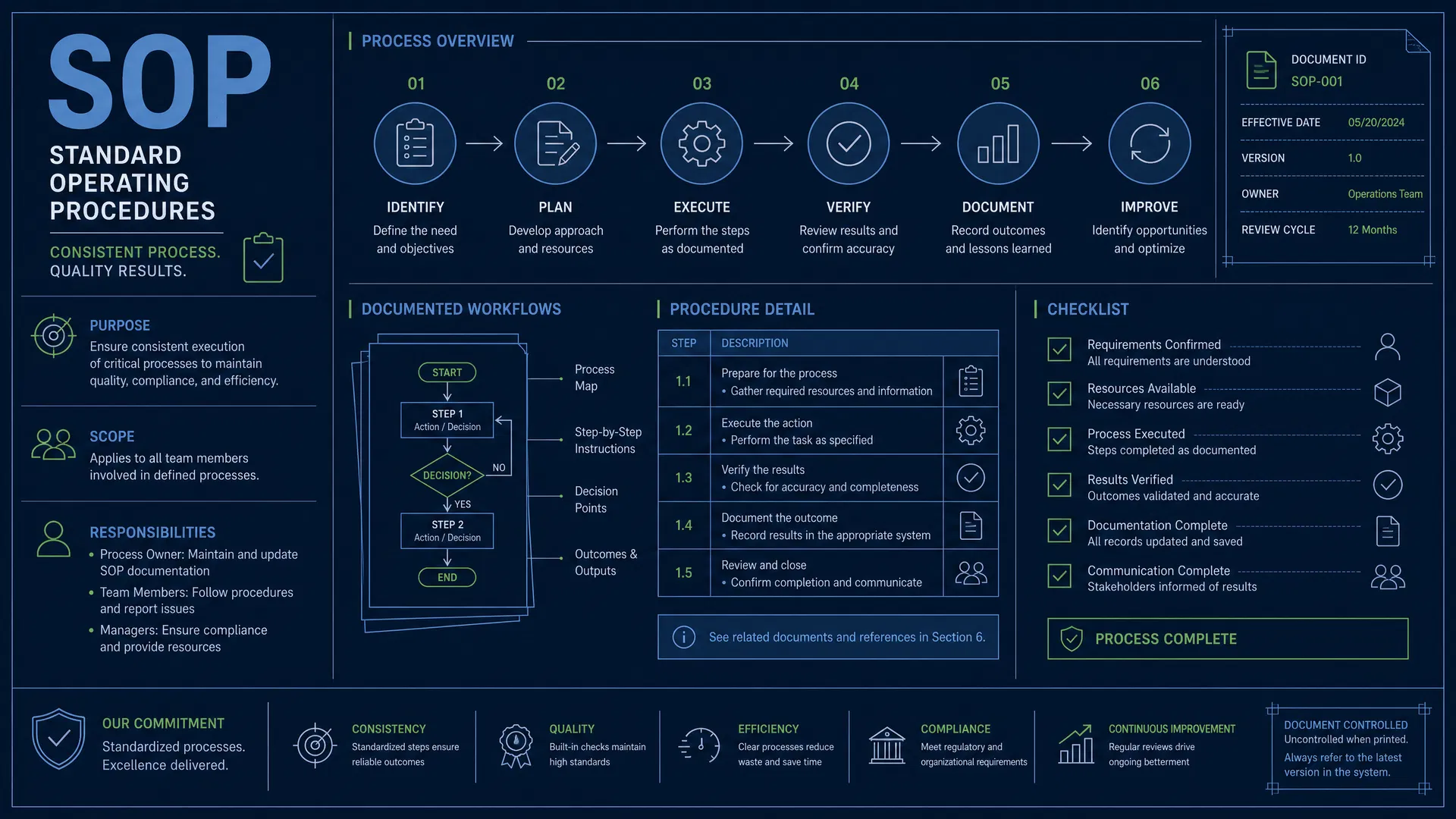
The SOP Myth
Most business owners think SOPs (Standard Operating Procedures) are complicated. They imagine thick manuals, complex flowcharts, and hours of documentation.
So they don't write them.
Here's the truth: **SOPs don't have to be complicated**. They just have to be clear.
What an SOP Actually Is
An SOP is simply: a written set of steps that explains how to do something in your business.
That's it. No complexity required.
The Simple SOP Framework
Here's how to write one:
1. Name the Process
Be specific. Not "Customer Service" but "How to Handle a Customer Complaint."
2. Why It Matters
One sentence. Why does this process exist? What does it protect or improve?
3. Who Does This?
Who is responsible for following this process?
4. When Does This Happen?
When in your business cycle does this process occur?
5. The Steps
Number each step. Be specific. Write as if you're explaining to someone who has never done this before.
6. What Could Go Wrong?
List 2-3 common mistakes. How do you avoid them?
7. How Do You Know It Worked?
What's the success indicator? How do you measure if this was done correctly?
Example: Opening Checklist for a Restaurant
**Process Name:** Daily Opening Checklist
**Why It Matters:** Ensures the restaurant is clean, safe, and ready for service every day.
**Who Does This:** Opening manager
**When:** 30 minutes before opening
Steps:
1. Unlock front door and disarm alarm
2. Turn on all lights
3. Check temperature of all coolers and freezers (should be at target temp)
4. Walk the dining room — check for cleanliness, broken items, anything out of place
5. Check restrooms — clean, stocked, functioning
6. Verify POS system is on and functioning
7. Check that all prep stations have necessary tools and supplies
8. Review reservations and special requests for the day
9. Brief the team on the day's specials and any issues
What Could Go Wrong:
How You Know It Worked:
Why This Works
This format is simple because it:
Where to Start
Pick your most important process. The one that:
Write one SOP this week. Use the framework above. Keep it simple.
Then write the next one.
You don't need perfect SOPs. You need functional ones. Start simple. Improve over time.
Ready to Apply These Ideas to Your Business?
Book a 15-minute strategy call to discuss how these concepts apply to your specific situation.
Book Your Free Business Systems Snapshot